
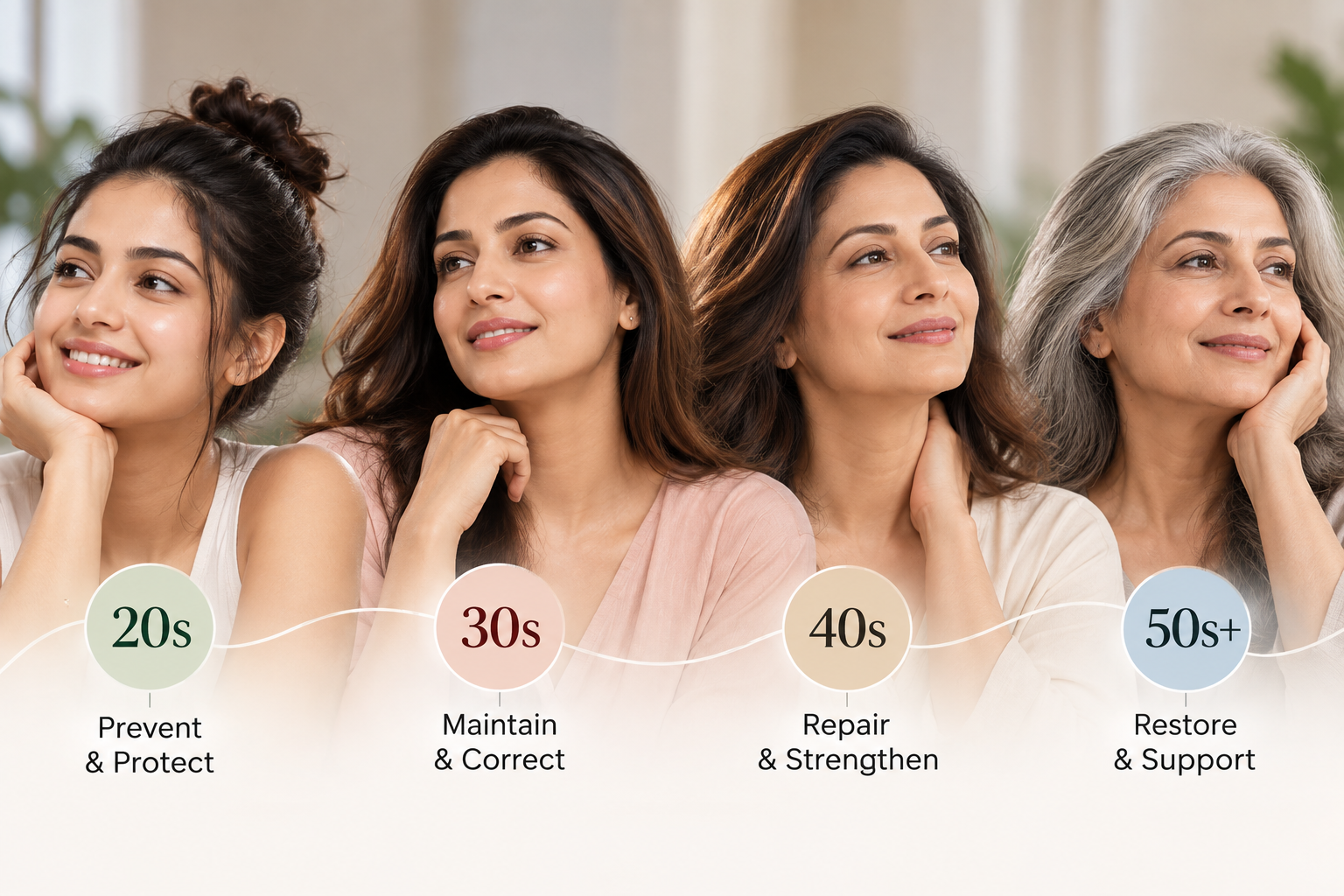
Skincare Routine by Age: What Your Skin Needs in Your 20s, 30s, 40s & 50s
Ageing is inevitable, but looking aged doesn’t have to be. Healthy, glowing skin is not simply about genetics. It is also the result of consistent skincare, sun protection and choosing products according to your skin’s changing needs. Whether you are in your 20s or 60s, a thoughtful skincare routine can help maintain skin health and support a confident, radiant appearance.
How Does Your Skin Change With Age?
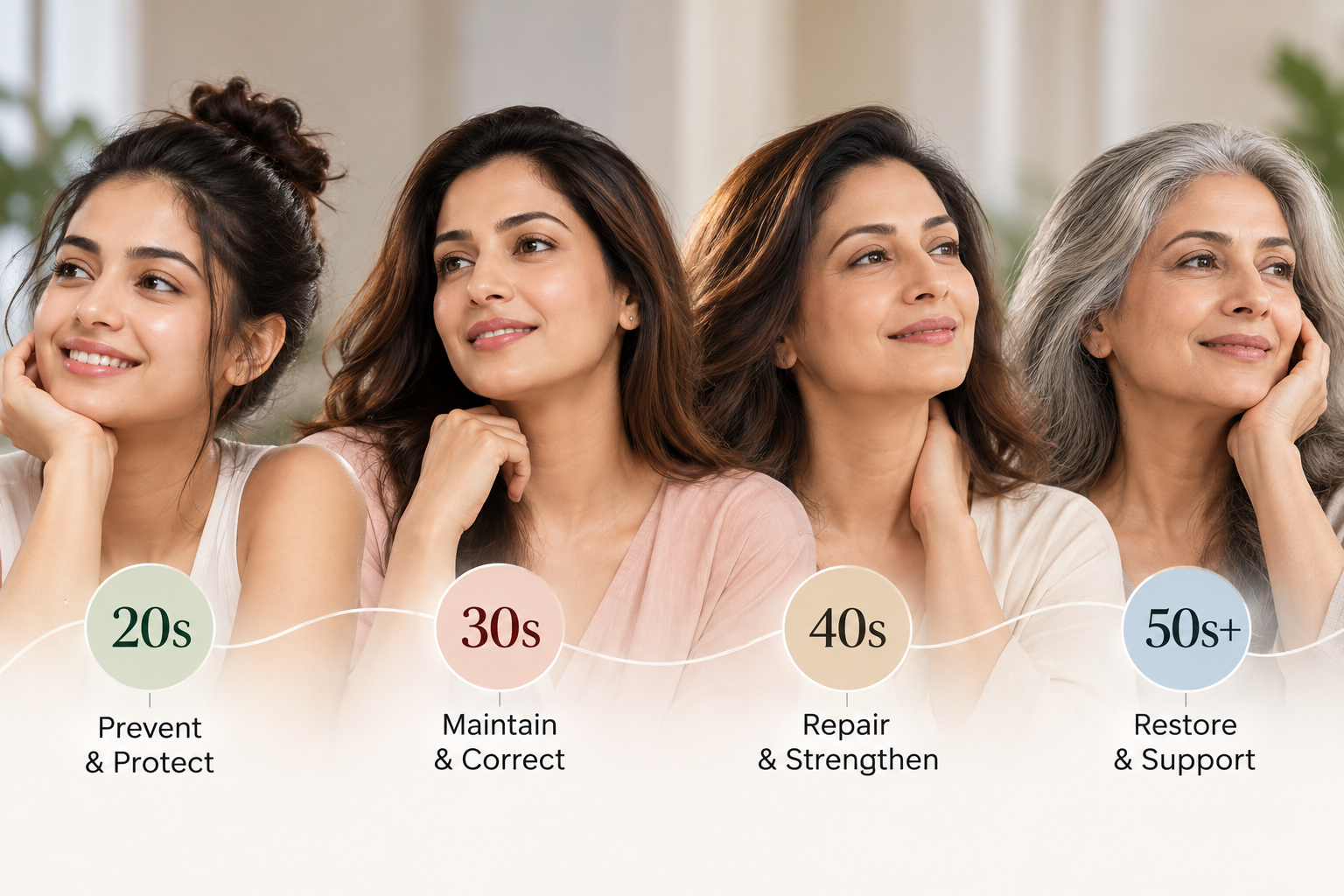
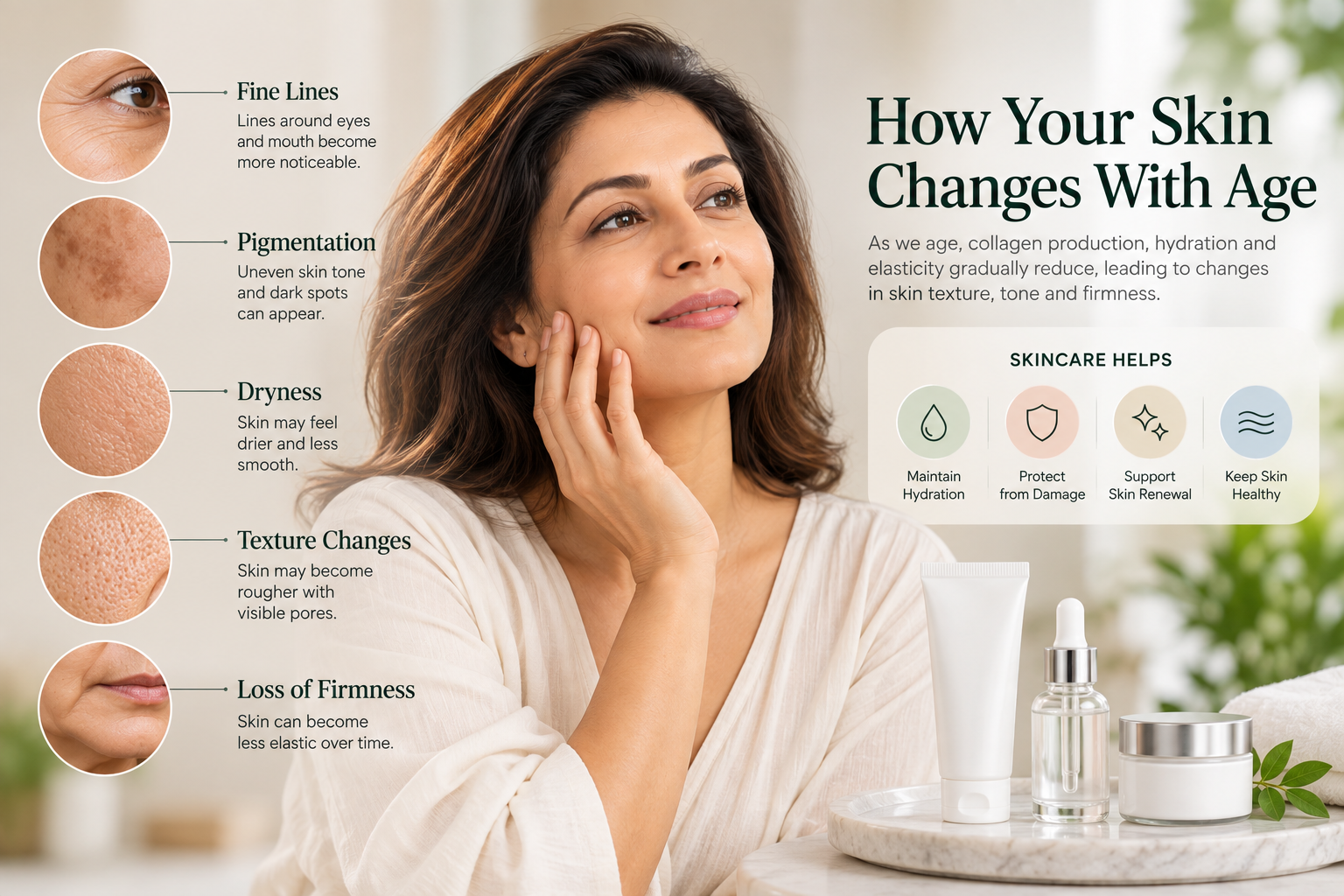
As we grow older, the skin naturally undergoes changes. Fine lines and wrinkles can become more noticeable, while the skin may become drier, duller and less elastic. Pigmentation, rough texture, visible pores and sagging can also become more prominent over time. These changes are influenced by natural ageing as well as factors such as sun exposure and lifestyle. Your skincare routine should therefore evolve with your skin rather than remaining exactly the same throughout life.
In Your 20s: Prevention Is Power
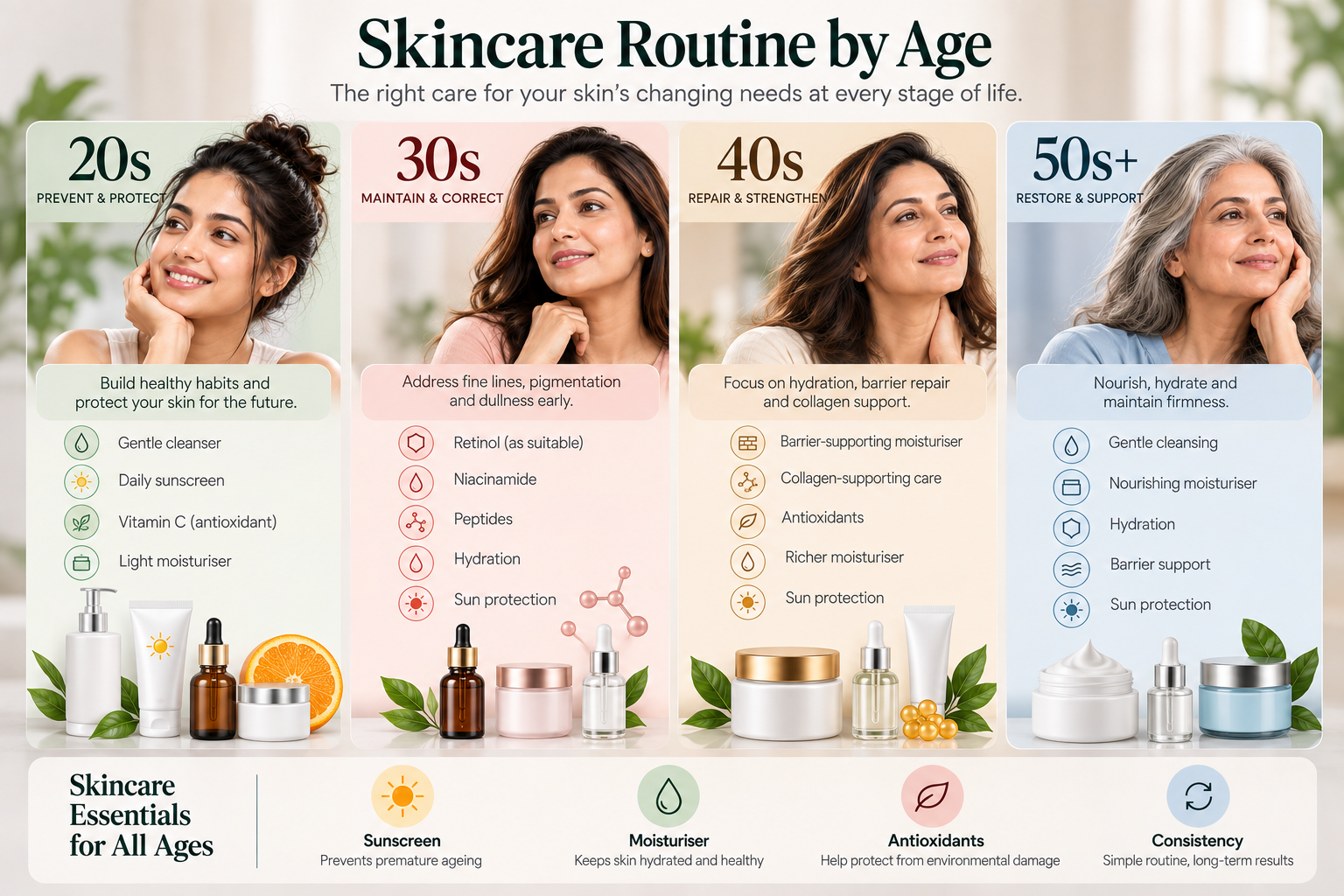
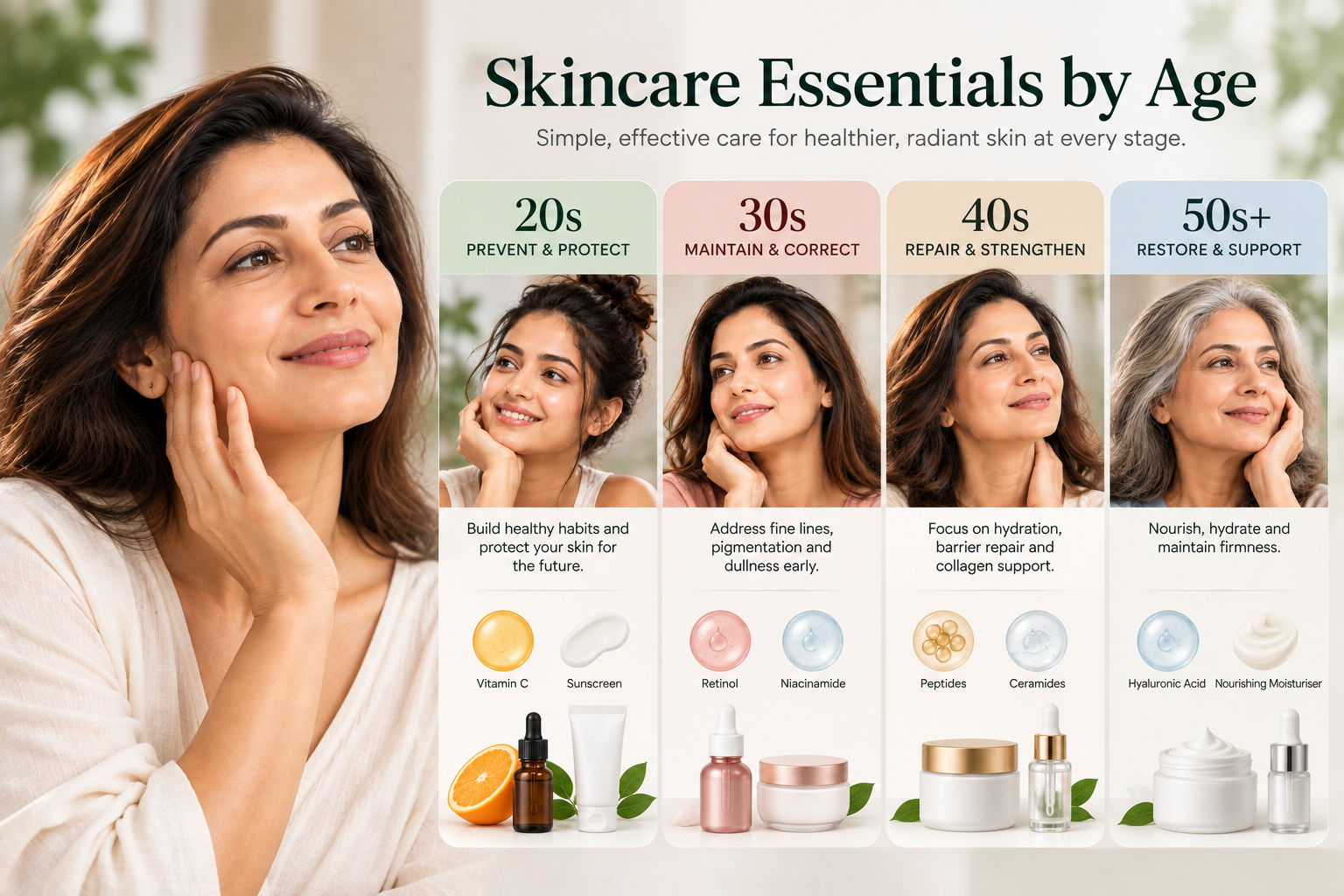
Your 20s are the ideal time to build healthy skincare habits. Skin is generally youthful and resilient at this stage, but sun exposure, lack of sleep and lifestyle habits can gradually contribute to pigmentation and premature skin ageing. The main goals during this stage are to preserve collagen, prevent pigmentation and maintain hydration. Keep your routine simple with a gentle cleanser, broad-spectrum sunscreen, an antioxidant such as vitamin C and a suitable moisturiser. Consistent sun protection is particularly important because protecting your skin early can help reduce the need for corrective treatments later. You do not need a complicated or expensive skincare routine. Good habits and consistency are more important than using a large number of products.
In Your 30s: Address the First Signs
Your 30s can be the stage when the first visible signs of ageing begin to appear. Fine lines around the eyes and mouth, early pigmentation, dullness and uneven skin tone may become more noticeable. The focus at this stage is maintaining brightness, firmness and an even complexion. Retinol may be introduced gradually when appropriate for your skin. Ingredients such as peptides and niacinamide can also be incorporated into a suitable routine. Hydrating ingredients and moisturisers containing ceramides can help maintain the skin barrier and prevent excessive dryness. If you are introducing active ingredients, it is better to start slowly rather than using several strong products at the same time. Your routine should always be adjusted according to your skin’s tolerance and concerns.
In Your 40s: Repair and Reinforce
During your 40s, the skin may begin to feel drier and less elastic. Hormonal changes and natural reductions in collagen can contribute to deeper wrinkles, pigmentation, dryness and changes in firmness. The focus now shifts towards supporting the skin barrier, restoring hydration and maintaining elasticity. Appropriate retinoids, peptides and antioxidants can form part of an anti-ageing routine. Richer moisturisers containing ingredients such as ceramides, glycerin and fatty acids can be helpful when the skin becomes drier. At this stage, avoid over-exfoliating. Instead of constantly adding stronger products, concentrate on hydration, barrier support and consistent sun protection.
In Your 50s and Beyond: Restore and Support
In your 50s and beyond, hormonal changes and natural ageing can contribute to increased dryness, loss of volume, sagging and deeper wrinkles. The priorities at this stage are strengthening the skin barrier, maintaining hydration and supporting the skin’s overall appearance. Barrier-supporting moisturisers containing ceramides and suitable lipids can help manage dryness. Gentle exfoliation may be incorporated when appropriate, while nourishing skincare can help maintain comfort and hydration. For more visible concerns such as significant wrinkles, sagging or volume loss, dermatological treatments such as lasers, microneedling or other aesthetic procedures may be considered after professional evaluation.
What Should You Use at Every Age?
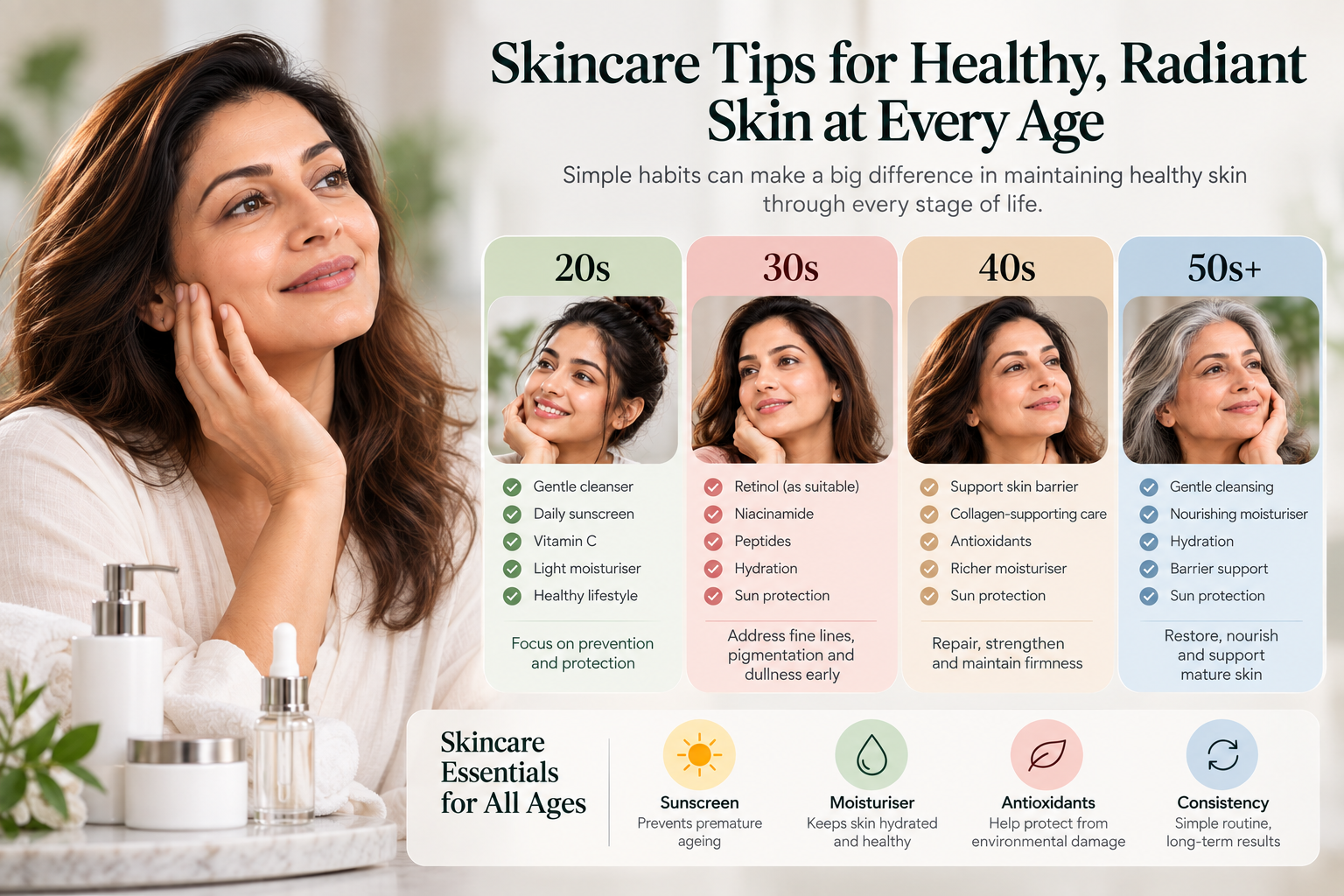
Regardless of your age, some skincare essentials remain important. Sunscreen helps protect the skin from UV-related damage, while moisturiser supports hydration and the skin barrier. Antioxidants can complement your routine, and consistency is essential for achieving meaningful long-term results. A good skincare routine does not have to contain ten or fifteen products. Choosing a few appropriate products and using them consistently is often more useful than constantly changing your routine.
Common Anti-Ageing Skincare Mistakes
Skipping sunscreen is one of the most common skincare mistakes. Over-exfoliating is another, as excessive exfoliation can irritate the skin. Using too many active ingredients at once can also cause dryness and sensitivity. It is also important not to follow every skincare trend simply because it is popular online. Your routine should be based on your skin type, concerns and professional advice when necessary. Expensive products are not automatically better, and a simple routine can be highly effective when the ingredients are appropriate.
When Should You See a Dermatologist?
Consider consulting a dermatologist if you have persistent pigmentation, significant dryness, unusual skin changes, worsening sensitivity or concerns about wrinkles, sagging or other signs of ageing. A dermatologist can assess your skin and recommend a personalised skincare routine or treatments based on your individual concerns.
Conclusion
Ageing is a natural and beautiful part of life. Skincare is not about stopping the ageing process or chasing perfection. It is about protecting your skin, maintaining its health and adapting your routine as your needs change. Start with the basics, protect your skin from the sun, maintain hydration and introduce active ingredients thoughtfully. Most importantly, remember that good skincare does not need to be complicated. Consistency, appropriate care and professional guidance when needed can help your skin remain healthy and radiant at every age.